Ausgesuchtestenohren
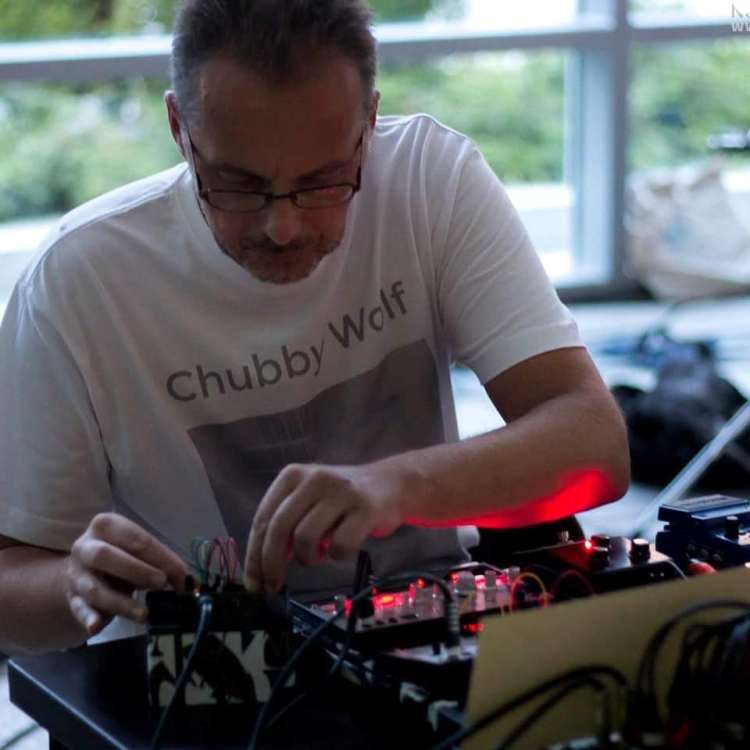
Ausgesuchtestenohren is the experimental music project of Karl Katschthaler, an Austrian composer and sound artist living and working in Vienna, Austria.
His musical practice is characterized by:
Deep Engagement with Sound Itself: He is primarily interested in the intrinsic qualities of sound, exploring it “from the inside” rather than relying on traditional musical structures or cultural references.This focus results in works that are immersive and encourage listeners to experience sound in novel ways.
Musique Concrète and Field Recordings: Ausgesuchtestenohren’s practice is closely related to musique concrète, extensively utilizing field recordings as raw material.This approach blurs the line between music and environmental sound, creating compositions that often feel both organic and abstract.
Genre Overlap and Experimentation: The project seamlessly integrates elements from ambient, noise, and drone music, allowing for a diverse sonic palette and a willingness to experiment with form and texture.
Conceptual and Scientific Themes: Some releases, such as “Transition States,” are inspired by scientific principles, using concepts like transition and equilibrium as compositional tools.This intellectual approach adds a unique conceptual framework to the music.
Site-Specific and Contextual Works: Ausgesuchtestenohren frequently presents site-specific performances and installations, adapting compositions to the acoustics and context of each venue.
Emphasis on Atmosphere and Hauntology: Albums like “FATUM” and “Spectres of the Sublime” create uncanny, haunting atmospheres without resorting to direct sampling of past cultural sources, achieving a sense of memory and presence through processed field recordings and synthesized sounds.
Minimalism and Sonic Restraint: Many works, such as “Exercises in Minimalism” and “Drones for Weekdays,” employ minimalist techniques, focusing on subtle variations, sustained tones, and the interplay of silence and sound.
Interdisciplinary Inspiration: The project draws on literature (e.g., Gertrude Stein’s “Tender Buttons”) and pays tribute to influential figures in ambient music, demonstrating a broad range of influences and a reflective, scholarly approach to composition.
 Ausgesuchtestenohren